
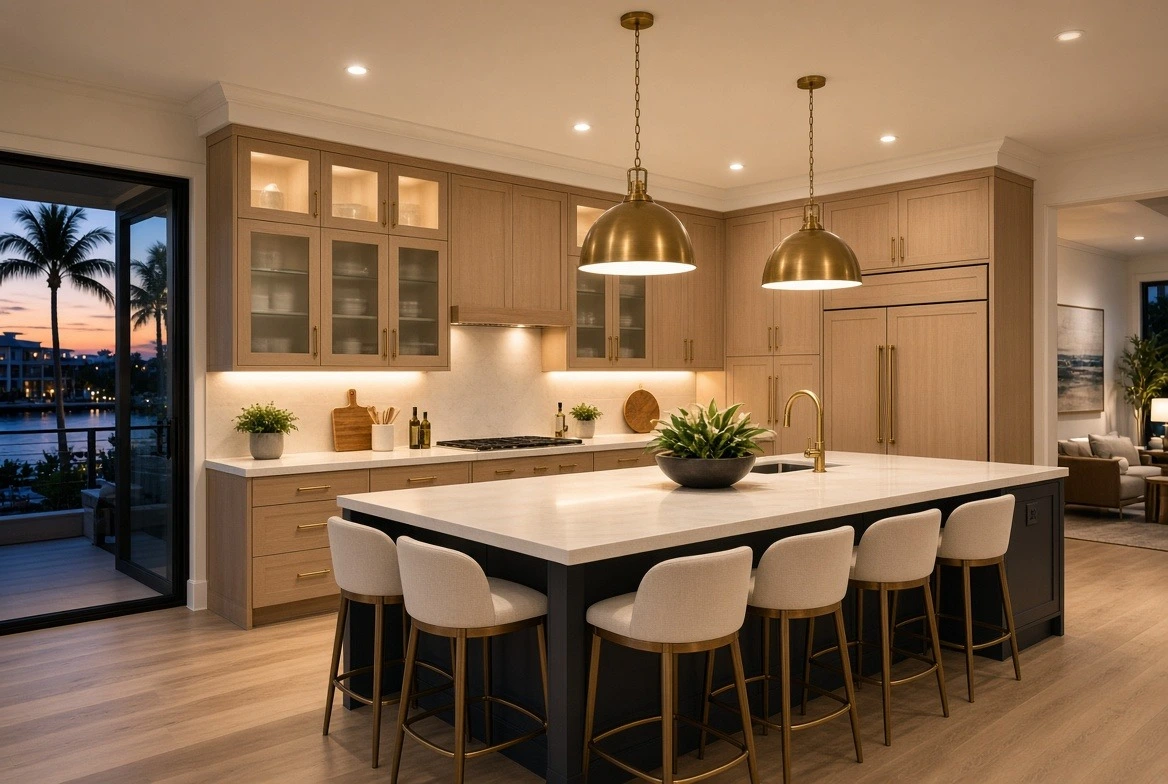
You can spend a fortune on cabinets and stone. But poor lighting will flatten all of it. That’s the hard truth about kitchens. Lighting is the detail people forget, yet it changes everything. Done right, it makes your whole kitchen look finished. So we design it from day one, never as an afterthought. Here’s how great kitchen lighting design really works.
Quick Answer: What Is Good Kitchen Lighting Design?
Good kitchen lighting uses layers. No single fixture can do it all. Instead, you combine three types that work together:
- Ambient lighting — general brightness for the whole room
- Task lighting — focused light for work areas
- Accent lighting — mood and style touches
Layer these three well, and the kitchen simply works. You see clearly to cook. You dim it low to relax. For the full service overview, see our indoor kitchen remodeling page.
Why Lighting Makes or Breaks a Kitchen
Think about your favorite restaurant. The lighting sets the whole mood. Kitchens work the same way. The right light flatters your finishes and warms the room.
Poor lighting does the opposite, though. It creates harsh shadows over your counters. It leaves corners dark and gloomy. So you end up working in your own shadow. Meanwhile, great lighting makes even a simple kitchen glow. That’s why we treat it as core to the design.
Layer One: Ambient Lighting
Ambient lighting is your foundation. It fills the room with general, even brightness. Usually, that means recessed ceiling lights. They keep the ceiling clean and modern.

Get the Placement Right
Placement matters more than people think. Lights should fall over walkways and open areas. Poor spacing leaves dark spots and shadows. So we map the layout around how you move. As a result, the whole room feels bright and balanced.
Keep It Flexible
Ambient light shouldn’t be all-or-nothing. So we put it on dimmers. You get full brightness for cleaning. Then you soften it for dinner. That flexibility changes how the room feels.
Layer Two: Task Lighting
Task lighting is the game-changer. It brightens the exact spots where you work. Under-cabinet lighting is the star here. Honestly, it’s one of the best upgrades in any kitchen.

Without it, you chop in your own shadow. With it, your counters light up evenly. So prep becomes easier and safer. On top of that, it looks beautiful at night. Leave the main lights off, and the counters glow softly. See real examples in our gallery.
Layer Three: Island Pendants and Statement Lighting
Now for the fun part. This is where lighting becomes design. Island pendants add both function and style. So they often become the jewelry of the kitchen.

Function First
Pendants light the island for prep and dining. So they earn their place practically. But they also anchor the island visually. That makes the space feel intentional.
Then Style
Here’s where personality shows up. The right pendants add shape, color, and character. We balance their size, height, and spacing carefully. Too low, and they block sightlines. Too high, and they lose impact. Done right, they make a statement without overwhelming the room.
Add Accent Lighting for Depth
Accent lighting is the finishing touch. It adds warmth and custom character. These are the subtle details people notice without knowing why.

For example, in-cabinet lighting glows behind glass-front doors. Toe-kick lighting adds a soft floating effect. Above-cabinet lighting draws the eye upward. Each one adds depth and richness. So the kitchen feels layered and designed, not flat.
Get the Color Temperature Right
Here’s a detail that trips up many remodels. Color temperature changes everything. It’s measured in Kelvin, but the idea is simple. Warm light feels cozy. Cool light feels crisp.

Most kitchens look best in warm to neutral tones. Warm light flatters wood, stone, and skin. Cool light can feel clinical and harsh. So we usually choose warm, inviting tones. We also keep every bulb consistent. Mismatched temperatures ruin an otherwise great design.
Put It All on Smart Controls
Layers are powerful. Controls make them flexible. Dimmers are the simplest, best upgrade. They let one kitchen serve many moods.
Smart controls go further, too. You can group lights into scenes. One tap sets “cooking” or “entertaining.” Some systems even run on a schedule. So your lighting adapts to the moment. Honestly, dimmers alone transform how a kitchen feels. We recommend them on nearly every project. For more, see our kitchen lighting page.
Design Lighting From Day One
Here’s our biggest rule. Lighting can’t be an afterthought. Wiring and placement happen early in a remodel. So the plan must come first.
We map the lighting alongside the layout. Recessed lights follow your zones. Pendants mark the island. Under-cabinet runs get wired during construction. That way, everything works together perfectly. Add it late, and you compromise the whole design. Plan it early, and the kitchen looks effortless.
Frequently Asked Questions
What are the three layers of kitchen lighting?
The three layers are ambient, task, and accent. Ambient gives overall brightness. Task lights your work zones. Accent adds mood and style. A great kitchen uses all three.
What color temperature is best for a kitchen?
Most kitchens look best in warm to neutral white light. Warm tones feel inviting and flatter your finishes. We usually use dimmable, warm LEDs and keep every bulb consistent.
How many pendants should go over an island?
It depends on the island’s length and the pendant size. We space them evenly and size them to the island. The goal is balance, both for light and for looks.
Should kitchen lights be on dimmers?
Yes, whenever possible. Dimmers let one kitchen shift from bright and busy to soft and calm. They’re one of the best-value upgrades in any remodel.
When should I plan kitchen lighting?
From the very beginning. Wiring and fixture placement happen early in a remodel. Planning the lighting upfront keeps the whole design cohesive and avoids costly compromises.
Ready to Design Your Kitchen Lighting?
Great lighting is the difference between a kitchen that works and one that wows. Layer it well, warm it up, and plan it early. That’s how the whole room looks finished. Request a consultation, and let’s design lighting built around your kitchen.


